A tree planted today is doing something a fence or a garden bed can’t. It’s growing into something that will change the property over decades, provide shade that meaningfully reduces cooling costs in Ottawa summers, create habitat, and add value in ways that show up both in how the yard feels and in actual property assessments. Trees are long-term investments in the truest sense, and getting the decision right from the beginning matters considerably more than most people think when they’re standing in a nursery trying to pick something.
Ottawa’s climate is specific enough that species selection and timing matter more here than in milder places. This post covers what actually goes into successful tree planting in Ottawa, from choosing the right species for the situation to planting correctly to the care that determines whether a tree thrives or struggles over its first critical years.
Why Species Selection Is the Most Important Decision
Everything else about tree planting in Ottawa is easier to get right than species selection, and species selection is where most mistakes happen.
The wrong tree in the wrong spot is a problem that compounds over time. A species that grows too large for the space becomes a liability. A species that doesn’t tolerate Ottawa’s climate extremes struggles and eventually fails. A tree planted too close to the house, driveway, or sewer line creates problems that cost more to fix than the original planting cost.
Getting this right starts with understanding what Ottawa’s climate actually demands. Hardiness zone 5b through 6a covers most of Ottawa, which means cold winters with temperatures that regularly reach minus twenty or colder and the freeze-thaw cycles that are harder on plant material than sustained cold. Trees need to be rated for this climate, not just marginally tolerant of it.
Beyond climate hardiness, the specific conditions of the planting site matter. Sun exposure. Soil drainage, because Ottawa has areas with clay-heavy soils that drain poorly. Available space at maturity, not at the time of planting. Proximity to utilities, structures, and infrastructure. All of these factors feed into what species is actually appropriate for a specific location.
Species Worth Knowing for Ottawa Specifically
A few categories worth understanding before visiting any nursery.
Native plants make the ideal starting point. Native trees in the Ottawa valley area have acclimatized to the environment, provide food for local wildlife, and usually need minimal maintenance after planting when compared to exotic ornamental plants. Eastern white cedar for privacy purposes. Red oak for larger areas where it can thrive because of its growth potential. White birch for its aesthetic appeal, although needs proper planting away from heat sources.
Maples are the obvious Ottawa tree, sugar maple and red maple specifically. They’re well-suited to the climate, provide genuine shade at maturity, and have the fall colour Ottawa is known for. The consideration with maples is size and root system, they’re not small-space trees.
Smaller ornamental trees. The serviceberry is indigenous to the area and attracts wildlife, remaining appropriately sized for urban lots. The hawthorn provides structure along with attracting wildlife in an appropriately sized form. The Japanese tree lilac, which is an ornamental tree and not a shrub, is appropriate for smaller urban lots, as it does not have rooting issues of maples.
What to be careful with. Manitoba maple, which colonizes aggressively and has wood that splits easily. Willows, which have water-seeking root systems that find sewer lines and don’t belong anywhere near underground infrastructure. Any species at the edge of its hardiness range that will require extra care to get through Ottawa winters.
Timing: When Planting Trees in Ottawa Makes Sense
Spring and fall are both viable planting seasons in Ottawa and each has genuine advantages.
Spring planting, after the ground has thawed and before summer heat sets in, gives trees the full growing season to establish root systems before their first Ottawa winter. The limitation is that spring is dry in Ottawa more often than fall, which means more active irrigation is required during the establishment period.
Fall planting, from late August through October before the ground freezes, allows root establishment in cooler, moister conditions that reduce transplant stress. Trees don’t have the energy demand of leaf production and can put resources into root growth. Fall-planted trees often establish more successfully than spring-planted ones in research comparisons. The consideration is getting the tree in the ground early enough in fall that it has time to establish before hard frost.
Summer planting is possible but requires more intensive irrigation management and subjects the tree to establishment stress during its highest-demand period. Worth avoiding if timing can be managed.
The Planting Process Done Correctly
This matters more than most people give it credit for. Trees planted incorrectly fail to thrive even when the species selection was right.
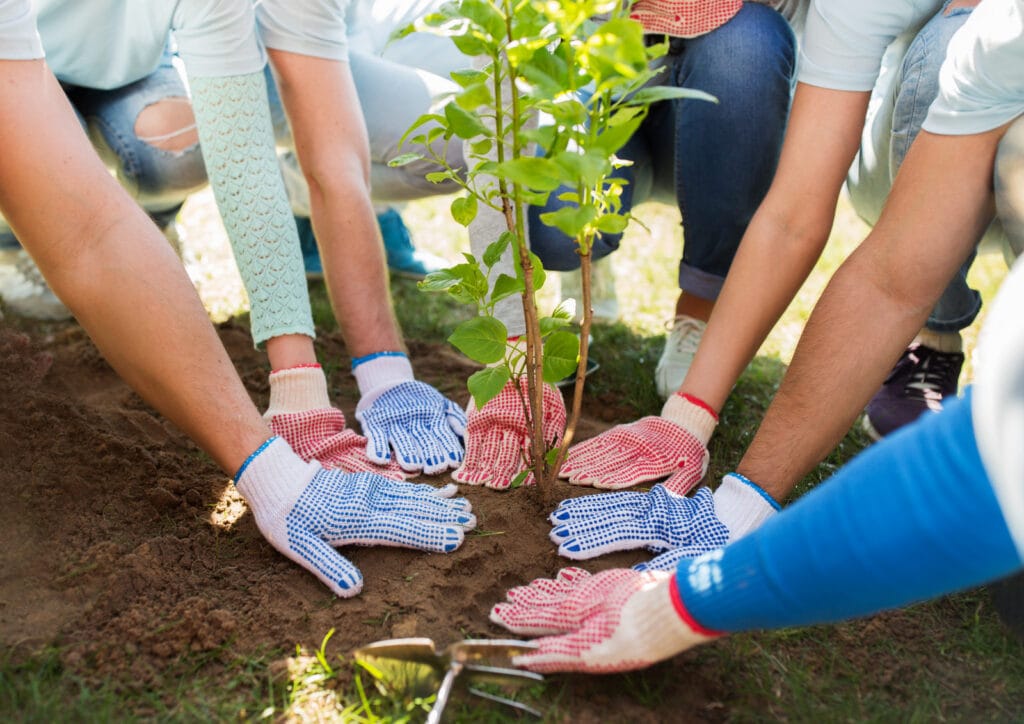
Depth of the hole is another aspect that is often misinterpreted. The planting hole should be as deep as the root ball but twice or thrice its width. The most common mistake that occurs during planting is planting the tree deep into the soil. This causes issues with the roots, hence compromising the well-being of the tree in the long run.
Soil amendment is more nuanced than dump compost in the hole. For most situations, backfilling with the native soil rather than heavily amended soil produces better results. Roots need to eventually grow into the surrounding native soil, and a highly amended backfill creates an interface that roots can be reluctant to cross.
Mulching after planting is essential and mostly misunderstood. Application of a three to four-inch layer of mulch on top of the root zone without touching the trunk is beneficial because it holds water, keeps the temperature of the soil consistent, and controls the grass and weed growth. Mulching by creating a volcano around the trunk leads to bark rot and should not be performed.
Watering at the time of planting and for the first two years thereafter is all that will determine the survival of the newly-planted trees. The root ball will always dry faster than the soil and requires watering directly when conditions are dry.
Professional Tree Planting Services in Ottawa
When does professional help make sense versus handling planting independently?
For large balled and burlapped trees, the physical handling alone justifies professional involvement. A three to four inch caliper tree is extremely heavy and requires equipment to move and position properly. Planting it incorrectly because it was physically impossible to handle properly costs more than the professional service would have.
Tree planting services in Ottawa that include proper site assessment, species recommendation for the specific situation, and guarantee on establishment are providing a meaningfully different product than buying a tree and planting it independently. For significant property investments, the professional advice and accountability is worth the cost.
Planting trees in Ottawa near infrastructure, close to the house, or in constrained urban sites where root management matters more than in open country is another situation where professional assessment adds genuine value.
The First Years: Care That Determines Survival
A planted tree is not an established tree. The distinction matters for how much attention it needs.
The need to water the young trees throughout their first two growing seasons is the most significant activity and usually tends to be overlooked the most. Irrigation that stimulates root development should involve infrequent but deep watering, which is better than frequently shallow watering. Irrigation that involves slow soaking in the root balls instead of spray watering is preferred.
The fertilization in the first years is much more complicated than one might think. Fertilizing with nitrogen-based fertilizer when the root system is not ready to sustain the top growth will result in imbalance. In case the planting spot is known to have a poor soil composition, some fertilizer could be applied after the second year.
It has to be mentioned that staking is often carried out either unnecassarily or inappropriately. For example, trees which are capable of standing on their own roots will form more developed trunk and roots compared to staked trees. In case staking is required for the tree which stands poorly and the site where it stands is windy, it has to be carried out loosely using flexible ties and not rigid ones and then it must be taken away in one growing season.
Pruning should only be carried out by cutting off dead or damaged branches during the initial years.
Final Thoughts
Tree planting in Ottawa is a decision that pays returns over decades, but only when the right species goes into the right location, planted correctly, and cared for through the establishment period. The investment in getting these things right from the beginning is considerably smaller than the investment in replacing a tree that failed or dealing with infrastructure damage from a tree poorly sited. Tree planting services in Ottawa that provide professional guidance are available for situations where the decisions are complex or the stakes are high enough to warrant expert involvement.
Frequently Asked Questions
What is the best time of year for tree planting in Ottawa?
Both spring and fall work well for planting trees in Ottawa. Fall planting, from late August through October, often produces better establishment because cooler temperatures reduce transplant stress and roots can establish before winter. Spring planting after the ground thaws gives trees a full growing season ahead. Summer planting is possible but requires more intensive irrigation management and is the most stressful option for newly planted trees.
What trees are best suited for planting in Ottawa's climate?
Native species adapted to the Ottawa valley region perform most reliably, including red oak, eastern white cedar, serviceberry, and sugar maple for appropriate-sized properties. These handle Ottawa's hardiness zone climate and freeze-thaw cycles better than non-native species at the edge of their range. Tree planting services in Ottawa can recommend specific species based on the site's sun exposure, soil drainage, and available space at maturity.
How long does a newly planted tree in Ottawa need watering support?
Most trees need consistent supplemental watering through at least the first two growing seasons before root systems are established enough to handle Ottawa's dry periods independently. Deep, infrequent watering directly at the root ball is more effective than frequent shallow watering. Planting trees in Ottawa during dry springs requires more irrigation management than fall planting when natural precipitation typically supports establishment more reliably.
When should professional tree planting services in Ottawa be used versus DIY planting?
Professional tree planting services in Ottawa make sense for large balled and burlapped trees that require equipment to move safely, for planting near infrastructure where root management requires professional assessment, or when site conditions are complex enough that species selection and placement decisions benefit from expert input. For smaller trees in straightforward situations with clear species selection, independent planting with careful attention to depth and mulching is manageable for most homeowners.
