Trees change properties. Not in the abstract, sentimental way that gets written about in gardening magazines, but in genuinely measurable ways. Shade that reduces cooling costs. Root systems that manage stormwater runoff. Property values that research consistently shows increase with mature tree canopy. Wildlife habitat. Air quality improvements. Carbon sequestration. A single well-chosen, properly planted tree does a lot over its lifetime.
It is because, in case if the tree is not planted properly, or if the wrong species of the tree is planted for the particular site, then none of the above possibilities would ever come to fruition. A tree which is under stress due to improper planting either because of deep planting, inappropriate soil, or inappropriate site would have to fight throughout its life and probably would not survive at all.
This is where a professional tree planting service earns its cost. Not just by putting a tree in the ground, which anyone can technically do, but by making the decisions that determine whether that tree becomes what it’s supposed to become over the decades ahead.
What Professional Tree Planting Actually Involves
This is where the gap between DIY tree planting and professional tree planting becomes most obvious.
A nursery trip produces a tree. That’s the starting point, not the end point. What happens between selecting the tree and having it successfully established in the ground involves decisions and physical work that most homeowners underestimate when looking at a reasonably-sized container tree in a garden centre.
For larger trees, balled and burlapped specimens with root balls that can weigh hundreds of kilograms, the physical reality of proper planting requires equipment. A professional tree planting service has the tools to transport, position, and plant large trees without damaging the root ball in ways that affect establishment. Doing this by hand typically means the tree gets planted in a way that’s convenient for the planters rather than optimal for the tree.
Beyond the physical work, professional tree planting includes the assessment that determines whether a specific tree is right for a specific location. Soil testing where it’s warranted. Understanding the mature size and growth habits of the species relative to overhead lines, structures, and underground infrastructure. Matching the tree’s requirements for sun exposure and drainage to what the site actually offers.
Species Selection Done With Actual Expertise
Here’s the truth – most of the people picking out trees at nurseries are more concerned with aesthetics before any considerations about whether the tree will work. Trees that look pretty when in flower end up being purchased without thought to their ultimate size, their behavior of the roots, their propensity for pests or disease, or even the climate of the particular location.
Professional tree planters take a completely different approach. They start with assessing the site. How is the soil? What underground structure is there? How much room does the tree need when it reaches its full size? What is the climate of this particular spot, taking into account microclimate issues such as wind, heat from pavement, or shade from buildings?
Species recommendation follows from site assessment rather than leading it. This produces very different outcomes than choosing a tree and hoping the site suits it.
For urban properties specifically, where space is constrained and proximity to infrastructure matters, getting species selection right is the difference between a tree that’s an asset for fifty years and one that becomes a problem within fifteen.
The Property Value Argument Is Real
This isn’t just a feel-good claim. Research from the USDA Forest Service has documented that mature trees add three to fifteen percent to residential property values depending on location and species. A study from the University of Washington found that street trees specifically increased retail sales in commercial areas, a measurable economic effect from tree presence.
Professional tree planting creates the conditions for trees to actually reach maturity rather than struggling and being removed. The investment in proper planting pays returns over decades in property value terms alone, separate from the energy savings from shade, the stormwater management benefits, and the quality-of-life aspects that are harder to quantify but genuinely real.
For anyone thinking about professional tree planting as a cost rather than an investment, the property value dimension changes the calculation meaningfully.
The Environmental Benefits Are Cumulative
A single tree makes a difference. A property with several well-chosen, properly planted trees makes a larger difference. A neighbourhood where professional tree planting has been applied consistently makes the kind of environmental difference that urban forestry research consistently documents.
trees are effective at mitigating urban heat island effect, which entails development areas being noticeably warmer than the adjacent rural areas. In addition to reducing pollution and improving air quality, trees absorb water, thus lowering the amount and speed of runoff during storms, which overloads the storm drainage system. Established trees filter any pollutants found in the water before it infiltrates into the groundwater. Carbon is sequestered in the wood of trees throughout their life span.
Correct planting of trees, whereby trees successfully become established, enhances all of these positive impacts of trees instead of forfeiting these impacts as a result of failure of poorly planted trees.
Planting Correctly: Why Technique Is Just as Important as Species
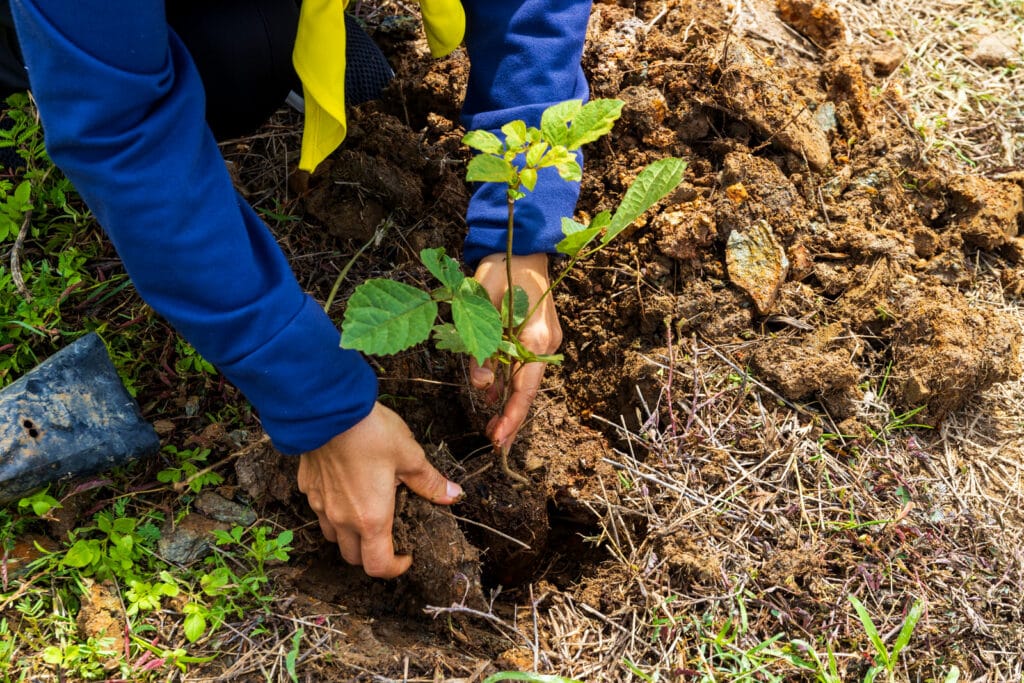
The most common tree planting error is planting too deep. It’s consistent enough across contexts that arborists treat it as the default assumption when diagnosing a struggling tree. A tree planted even a few inches too deep develops root problems that affect its health for its entire life. Girdling roots, poor gas exchange in the root zone, bark decay at the buried root flare, all of these follow from planting depth errors.
Professional tree planting gets depth right because it matters to the people doing it. The root flare, where the trunk transitions to root system, ends up at or slightly above grade rather than buried under soil or mulch.
Mulching after planting is similarly more technical than it appears. The right amount, the right material, kept away from direct trunk contact, and applied over the right area relative to the drip line. Volcano mulching, which looks tidy and is commonly done, causes bark rot and is the wrong approach despite being what many homeowners have seen done.
Root ball handling for balled and burlapped trees. Timing relative to weather conditions. Post-planting watering protocols that support establishment without creating anaerobic conditions in the root zone. All of these details add up to a tree that establishes successfully versus one that spends years struggling with problems created at planting.
The Warranty Question
Most reputable professional tree planting services stand behind their work with some form of establishment guarantee. This matters in a practical way.
A tree that fails to establish after professional planting typically gets replaced under warranty. A tree that fails after DIY planting is a loss and a do-over cost, plus whatever damage the failed tree may have caused during its struggle.
The warranty also creates accountability that influences how carefully the work gets done. A company guaranteeing establishment has a financial interest in getting the planting right the first time in ways that a purely transactional relationship doesn’t create.
Asking about warranty terms, what’s covered, for how long, and under what conditions, is worth doing before choosing a tree planting service.
Long-Term Care as Part of the Service
The planting day is not the whole picture. What happens in the first two to three years after planting determines whether the tree actually reaches the potential that made planting it worthwhile.
Professional tree planting services that offer establishment care, watering schedules, mulch maintenance, and early structural pruning as part of their service are providing considerably more value than those who plant and leave. The establishment period is when the tree is most vulnerable and when the decisions made about care have the most influence on long-term outcome.
Truth be told, a tree planted professionally and abandoned during establishment may do worse than a tree planted less expertly but cared for attentively afterward. The planting service that includes ongoing support for the first growing seasons is the one that actually delivers the results that motivated planting in the first place.
Final Thoughts
Professional tree planting delivers property improvements, environmental benefits, and long-term value that DIY planting frequently fails to achieve because of the accumulated effect of small errors in species selection, site assessment, planting technique, and establishment care. The trees that change properties over decades, that actually reach maturity and deliver what trees are capable of delivering, are almost always the ones that were planted correctly from the beginning. A professional tree planting service is what that beginning looks like.
Frequently Asked Questions
How much does a professional tree planting service typically cost?
Costs vary based on tree species and size, site conditions, and what the service includes in terms of establishment care and warranty. Larger balled and burlapped specimens cost more to plant than container trees due to handling requirements. Getting quotes that specify what's included, particularly whether establishment care and any guarantee are part of the service, gives the most useful basis for comparison between providers.
What's the difference between professional tree planting and planting a tree from a garden centre yourself?
Professional tree planting includes site assessment, species recommendation matched to actual site conditions, proper handling of larger specimens that require equipment, correct planting depth and technique, post-planting care protocols, and typically some form of establishment guarantee. DIY planting works for smaller trees in straightforward situations but misses the diagnostic and technical elements that determine whether a tree thrives long-term versus struggles with planting-related problems.
When is the best time of year to use a professional tree planting service?
Spring and fall are both appropriate seasons for professional tree planting in most Canadian climates. Fall planting in late August through October often produces better establishment because cooler, moister conditions reduce transplant stress. Spring planting after the ground thaws gives the full growing season ahead. A professional tree planting service assesses which timing makes sense for the specific species and site conditions rather than applying a single answer to every situation.
How long does it take for a professionally planted tree to establish?
Most trees take two to three years to develop root systems sufficient to be considered established in their new location. During this period they require supplemental irrigation during dry periods and attention to mulching and care. A professional tree planting service that includes establishment care through this period gives the tree significantly better odds of reaching the self-sufficient established stage than a plant-and-leave approach.
