
Picking a tree feels like a small decision at the time. A quick trip to the garden center, a nice-looking sapling, done. But that one choice ends up shaping the property for the next thirty or forty years, so it’s worth slowing down before committing. For anyone looking into tree planting in Ottawa, the region’s climate isn’t a mystery. It’s well documented, and once you understand a few basics, the odds of ending up with a healthy, long-lived tree go up considerably.
Ottawa falls into USDA hardiness zone 5a, with some outlying areas dipping into 4b during harder winters. That one detail eliminates a lot of trees sold at big chain garden centers, many of which are grown with a milder climate in mind. So before anything else, winter hardiness should be the first thing checked, not an afterthought once the tree’s already in the ground.
What Are the Best Trees to Plant in Ottawa?
I have seen that native species and near‑native species do best here. They have spent generations learning how to survive the freeze‑thaw cycles and the heavy clay that make up most of the region’s soil. Sugar maple is still a choice for larger properties. Sugar maple gives you fall color and stands strong against wind. Red maple works better in wetter or more compacted soil. This makes Red maple a good option when Sugar maple would struggle.
I know that smaller lots do not have to be left empty. Serviceberry and Ohio buckeye stay a size yet they still give you something worth watching through all seasons. Many homeowners, including myself, are drawn to maple or poplar because those trees grow fast. That makes sense if you want shade sooner than later. The catch is that silver maple and poplar have wood and root systems that spread aggressively. That becomes a problem near driveways, sewer lines or foundations. If you ask experienced crews at a tree planting company in Ottawa they will usually steer new clients away from silver maple and poplar even if they look appealing.
Evergreens are definitely worth thinking about. White pine and white spruce both take Ottawa winters in stride. They stay green all year. Give privacy even when the rest of the garden is bare. White spruce stands out because it handles clay soil better than most other evergreens. Most conifers struggle when the soil drains poorly.. White spruce holds up just fine.
Soil matters more than people realize. A lot of Ottawa has clay that holds water for days. When roots sit in water for long they start to rot. That’s why it’s smart to check the soil before planting. Just dig a hole 30 centimetres deep, fill it with water and watch how fast it disappears. If it’s still there after an hour the soil isn’t draining well. That means either pick a tree or improve the soil first.
When Is the Best Time to Plant Trees in Ottawa?
Two windows work well. The first is spring once the ground has thawed. The second is fall. Early fall runs from September into mid-October. Fall doesn’t get credit. The air is cooler. That means stress on the tree, above ground. The soil is still holding onto summer warmth. That gives roots a head start. That happens before winter shuts things down.
Spring has its own advantages, especially for species that don’t love being transplanted right before a cold snap. What really should be avoided is planting in the thick of July or August. A tree trying to establish roots while also fighting off heat stress is dealing with two problems at once, and that combination is where transplant shock tends to happen.
There’s a logistical side to timing as well. Ground that’s still partly frozen in late March can be tough to dig, and because Ottawa’s freeze-thaw pattern shifts from year to year, the ideal window can move around by a couple of weeks depending on how the season plays out.
Site Preparation and Planting Depth
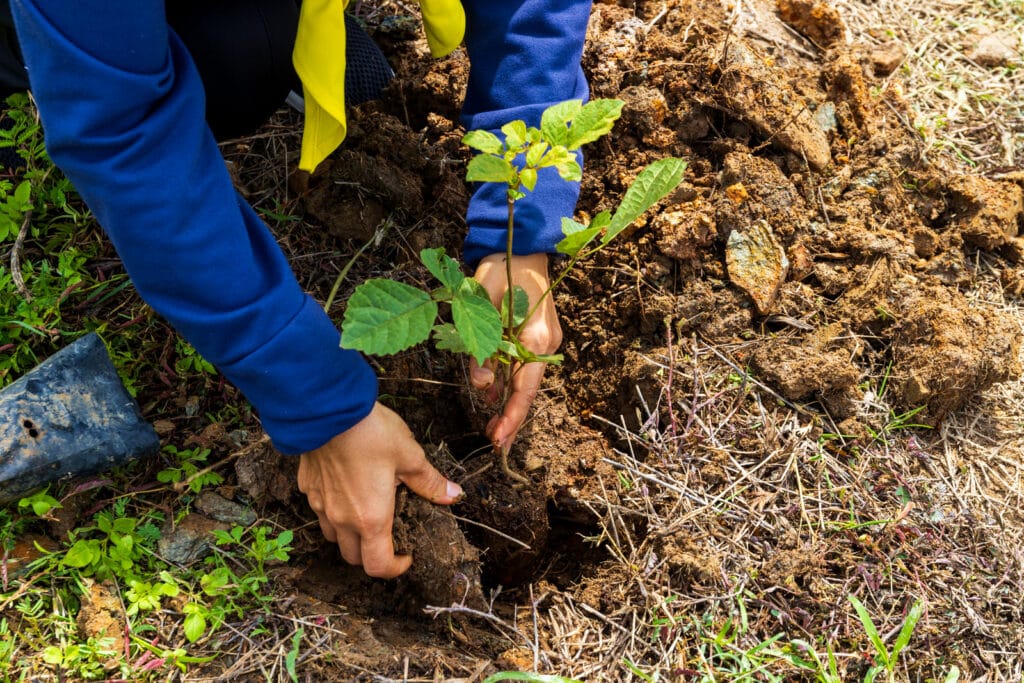
One mistake appears again and again in home planting jobs: the hole is dug deep. When a tree is planted below its root flare – the place where the trunk widens into the roots – the tree often develops rot or roots that wrap around the trunk in the future many years later. The hole should be no deeper than the root ball. It should be wider, ideally two to three times wider so the roots can spread sideways into loosened soil instead of fighting through compacted ground.
Backfilling with soil not amended potting mix is more important than people think. Roots that are used to rich loose soil around the trunk sometimes resist moving into the surrounding clay later which limits how well the tree can reach water and nutrients over the long term. A layer of mulch also helps. Keep the mulch a distance from the trunk and it will hold moisture and keep the soil temperature steady during the first few winters, which are usually the hardest time for a young tree.
When Professional Planting Makes Sense
Plenty of homeowners plant smaller trees on their own without any trouble. Larger caliper trees are a different story. Once balled and burlapped, they can easily top 100 kilograms, and mishandling during transport or planting can damage roots in ways that don’t show up until the tree starts declining a year or two down the road, by which point it’s harder to fix. Tree planting services in Ottawa usually bring the right equipment for handling that kind of weight, along with a proper read on soil conditions and placement relative to utility lines and long-term canopy growth, details that are easy to miss from a parking lot at a nursery.
Then there’s the rules part. Ottawa has rules about cutting down trees and in some situations about planting to property lines or places where the public has access, especially for types of trees that will get big with a large top. Working with a tree planting company in Ottawa that already knows these rules can help a homeowner avoid a problem that only appears after the tree is already growing.
At the end of the day picking the tree depends on matching the type of tree to the place following the time of year when trees should be planted and making sure the roots have enough space and support to actually grow strong. Whether that job happens alone on a Saturday afternoon or with expert help, the tree that is planted now is the one that will offer shade, privacy and a little bit of changing beauty, for years to come.
FAQs
What are the best trees to plant in Ottawa for a small yard?
Serviceberry and Ohio buckeye are choices for small properties in Ottawa. They stay a size and do well in the clay soil of the area. These trees do not have roots that spread out a lot unlike growing trees like silver maple. This makes them better to plant near driveways near the house and under the ground where there are pipes and wires.
When is the best time to plant trees in Ottawa?
The best times to plant are in spring after the ground is no longer frozen and in early fall from September to mid October. Planting in the fall usually works better because the soil is still warm but the air is cooler. It's best not to plant during the hot summer months like July and August.
Do I need a professional tree planting company in Ottawa for large trees?
Big trees that have been dug up with soil around their roots can weigh more than 100 kilograms. If these trees are not handled carefully the roots can get hurt. The damage might not be seen away. Tree planting companies in Ottawa have the tools and know about the soil. They also know the rules in the area, which helps avoid problems.
Why does Ottawa's clay soil matter for tree planting?
Clay soil holds water. If the roots sit in wet soil for too long they can rot. Checking how well the water drains before planting a tree and picking trees like maple or white spruce, which can handle clay soil helps the tree grow strong from the start. It keeps the tree from having a time right, from the beginning.
