Most tree failures look sudden. The damage that builds inside a tree usually takes a long time. A hollow trunk can still hold a canopy of green leaves for years and a large limb can look fine until the afternoon a tree falls. That gap between how a tree looks and how healthy it is shows why a tree inspection service exists. This article explains when to schedule a tree inspection in Ottawa, how to tell if a tree needs one, what a tree inspection visit involves and how to choose someone qualified to do a tree inspection.
What Is a Tree Inspection Service?
A tree inspection service means a qualified arborist visits the site to examine a tree’s roots, trunk, branch structure and canopy in order to find defects, disease and hazards. The goal is to judge how healthy a tree is and how likely a tree is to cause harm.
Two terms come up often. A tree health assessment looks at vigor and condition including leaf colour, pest activity, soil and root conditions and signs of disease. A tree risk assessment goes a step further. Estimates the chance of failure together with what would be hit if a tree fell. A looking maple over a parked car and a weak tree in an empty back corner carry very different levels of risk even if the defect is the same.
When Should You Schedule a Professional Tree Inspection in Ottawa?
The short answer is every year for mature trees and right away after storms, construction or any visible warning sign. Younger healthy trees on parts of a property can go longer between visits. Large trees near houses, driveways, play areas or neighbouring properties deserve attention.
Several situations make an inspection booking sooner rather than later.
After a Major Storm
Ottawa experiences freezing rain, wet snow and heavy wind and all three put strain on branches. The May 2022 derecho showed how quickly a tree that looks sound can lose limbs or lean after an event. Hidden cracks and torn roots are easy to miss from the ground so a post‑storm tree inspection is sensible even when the visible damage is small.
Before Buying or Selling a Property
A large tree is part of what a buyer’s getting. A tree inspection before a purchase can reveal a tree removal waiting in the backyard and a report before a sale can show that the trees are in good order.
Before or After Construction
Digging near a tree can sever roots and heavy equipment compacts soil around the root zone. The damage often shows up one to three seasons later as thinning leaves or sudden decline. Having an arborist assess trees before work starts and afterward helps protect trees worth keeping.
When a Tree Is Near Something Valuable
A tree leaning toward a house hanging over a shed or growing above a driveway has a consequence of failure. This is where a tree risk assessment is most useful.
How to Tell if a Tree Needs a Professional Inspection
Many trees show trouble well before they fail. The signs below suggest that an arborist should take a look soon. Dead branches or branches that have no leaves in summer point to stress or disease. Cracks or splits in a tree’s trunk or major limbs mean the wood has already given way in part. Mushrooms or conks growing at a tree’s base or on the trunk often indicate rot. A new lean, with soil heaving or cracking at a tree’s base can mean the roots are failing. Thinning leaves, fall colour in midsummer or small leaves compared to past years suggest a tree is struggling. Sap oozing from a tree’s bark sounding wood and large cavities are also worth attention.
In Ottawa specifically ash trees need watching. The emerald ash borer has been killing ash across the region for over a decade and infested trees become brittle and unpredictable. Small D‑shaped exit holes in the bark woodpecker damage and thinning crowns are clues. Elms are another concern because of Dutch elm disease, which causes a tree’s branches to wilt and yellow suddenly in summer.
One honest limit applies here. Many serious defects, such as decay or root problems cannot be seen from the ground by a homeowner. That is the reason to book a tree inspection even when nothing looks obviously wrong.
What Happens During a Tree Inspection?
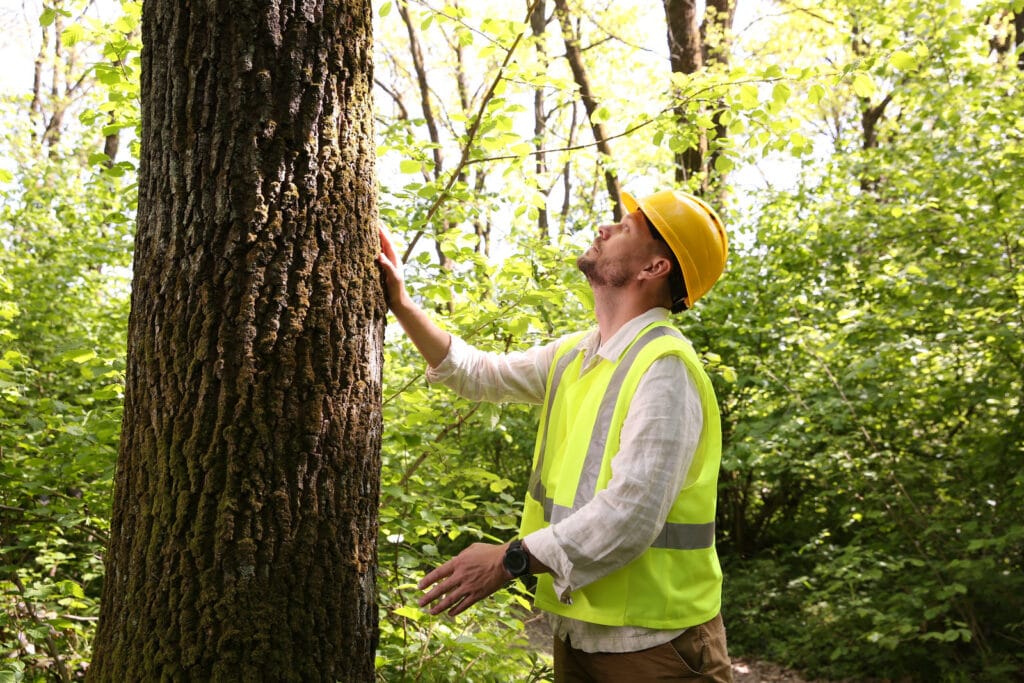
A typical visit follows an order though the depth depends on a tree and the purpose. The arborist reviews the site, the species of the tree and how old the tree is. What is near the tree, such as buildings, power lines and play areas. The arborist checks the root zone and base for decay changes in the soil, damage and fungal growth.
The arborist examines the trunk and branch structure for cracks, weak joints, cavities and dead wood. The arborist checks the canopy for pests, disease and signs of stress. If needed the arborist may use tools such as a mallet, probe to test for hidden decay. The arborist writes the findings. Gives clear recommendations. Recommendations might include monitoring, pruning, cabling, treatment or removal.
Look for an ISA certified arborist. For risk work the ISA Tree Risk Assessment Qualification, called TRAQ shows that the arborist has training in a standard method for rating hazards.
What Can Happen After the Inspection?
Not every inspection ends in news. Many trees simply receive a report and a suggested follow‑up date. Other trees need tree trimming to remove deadwood or reduce the weight on a weak limb. Some trees benefit from cabling or bracing and pest or disease problems may call for treatment. Removal is the option. It is usually recommended when the risk cannot be reduced in any way.
Ottawa has a tree protection bylaw that applies to larger trees on private property. Confirming the rules with the City before any removal helps avoid fines. Spring and summer work should also account for bird nests because nesting birds are legally protected in Canada.
Property owners who need follow‑up work can look at services such as tree removal, stump grinding and emergency tree service.
What to Check Before Hiring
Ask about certifications, liability insurance and WSIB coverage. Request a written report rather than a verbal opinion so the findings can be shared with insurers, neighbours or future buyers. Be cautious with anyone who recommends removal without explaining the defect or who quotes work without looking at the tree. A good inspection is not about finding reasons to cut a tree down. It is about knowing what is really happening inside the tree and deciding early while the options are still wide. Feel free to contact us!
FAQs
When should I schedule a tree inspection in Ottawa?
Mature trees benefit from an inspection every year and sooner after storms, construction work or a property purchase. Trees near homes, driveways or play areas deserve attention. Any visible warning sign, such as cracks, a lean or dead branch is a good reason to book right away.
How can I tell if a tree needs an inspection?
Watch for branches, trunk cracks, fungus at the base oozing sap, thinning leaves or a sudden lean. Hollow sounding wood and cavities are also warning signs. Since internal decay is often invisible from the ground a certified arborist can confirm whether the tree is stable or needs action.
What is the difference between a tree health assessment and a tree risk assessment?
A tree health assessment checks vigour, pests, disease and root conditions to see how well the tree is doing. A tree risk assessment goes further by estimating how likely the tree is to fail and what damage it could cause. Trees near buildings or people usually need the second.
Who should perform a tree inspection in Ottawa?
Choose an ISA arborist, ideally one with the TRAQ qualification for risk work. Confirm liability insurance and WSIB coverage. Ask for a written report. A qualified inspector explains the defects found and offers options, then pushing removal without clear reasons.
