People use “pruning” and “trimming” interchangeably all the time. Understandable both involve cutting branches, both involve someone showing up with equipment. But they’re not the same thing. They serve different purposes, target different situations, and produce different results. If someone searched for tree pruning near me and booked a crew without knowing which one the tree actually needs, there’s a decent chance the wrong work gets done. That’s more common than most people realize. And it can set a tree back. Here’s a clear breakdown of what each service actually is, when each one applies, and how to figure out what the trees on a given property genuinely need.
The Core Difference And Why It Matters
- Tree trimming is primarily about appearance and clearance. It’s about managing the outer shape of the tree keeping growth from encroaching on structures, power lines, or neighboring properties. Trimming targets the perimeter. It’s about controlling size and maintaining a tidy silhouette.
- Tree pruning services, on the other hand, go deeper. Pruning is about the health and structure of the tree from the inside out. It targets specific branches, dead ones, diseased ones, crossing ones, structurally weak ones. The goal isn’t appearance first. It’s biology. It’s making the tree stronger, safer, and more likely to thrive long-term.
Both matter. Neither replaces the other. But mixing them up or assuming one covers both is where things go sideways.
What Tree Pruning Actually Involves
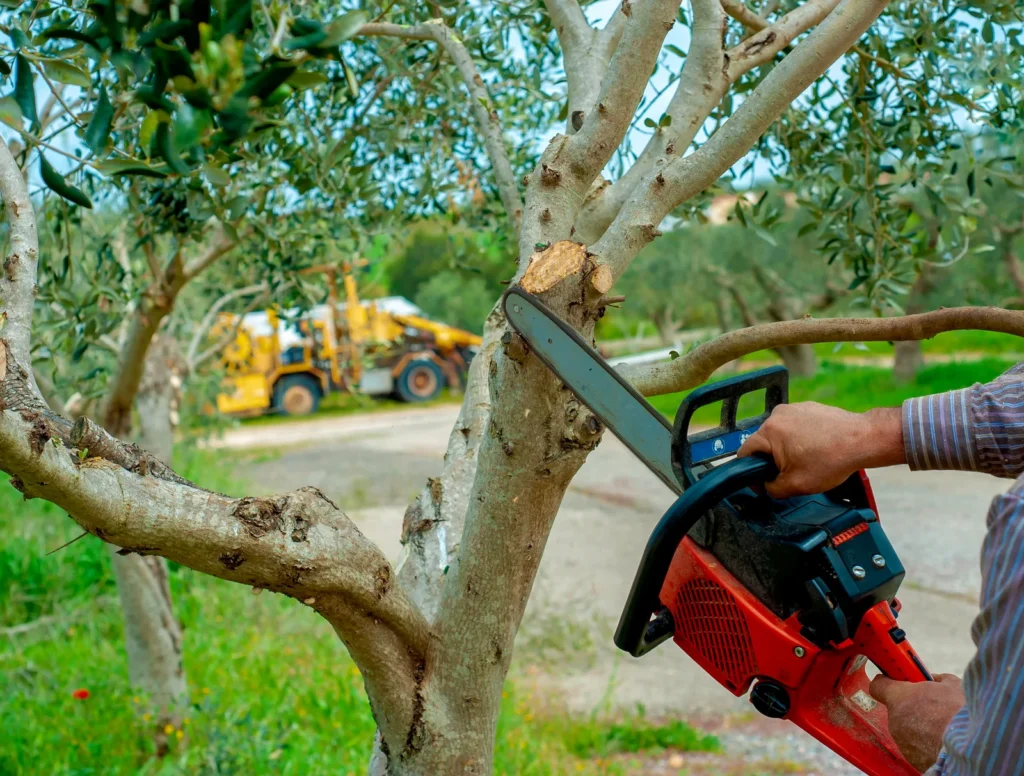
- Branch pruning is selective. That’s the key word. A trained arborist isn’t cutting everything that looks overgrown. They’re making specific decisions about specific branches based on what the tree needs structurally and biologically.
- Deadwood removal is usually the first priority. Dead branches don’t just look bad, they’re active hazards. They can drop without warning, even in calm weather. And dead wood inside a canopy is also an entry point for fungal disease and pests. Getting it out early is just good practice. Beyond that, pruning addresses crossing branches, ones that rub against each other and create wounds. It addresses branches with weak attachment angles that are likely to fail under load. It addresses crowding inside the canopy that restricts airflow and light penetration.
- Canopy management through proper pruning also reduces the overall wind resistance of a large tree. That’s not a small thing in a region that gets serious storms. A well-pruned canopy lets wind move through it rather than pushing against it like a sail.
- Tree growth is also directly shaped by pruning decisions. Where and how a branch is cut affects where new growth emerges. Skilled branch pruning can direct a tree’s energy toward strong, well-spaced growth and away from weak or problematic structure.
What Trimming Is Good For
Trimming has a different job and it does that job well.
- Tree shaping is where trimming lives. Hedges, ornamental specimens, trees planted near structures these benefit from regular trimming to keep their form, manage their footprint, and stay clear of things they shouldn’t be touching.
- Ornamental tree care often leans heavily on trimming for exactly this reason. Decorative trees are typically chosen for visual impact. Maintaining that visual impact means regular attention to the outer profile which is trimming work.
- Trimming is also about clearance. Branches overhanging a roof, scraping a fence line, blocking a sightline these get addressed through trimming. It’s responsive work in a lot of cases. The branch is in the way. Take it back.
It’s not wrong. It’s just not the same thing as structural pruning. And doing a lot of trimming on a tree that actually needs structural work doesn’t fix the structural problems.
When a Tree Needs Pruning vs. Trimming
Truth be told, a lot of trees need both just at different times and for different reasons. If a tree has visible dead branches, signs of disease, crossing limbs, or structural irregularities that’s a pruning conversation. Same if the tree has gone years without professional attention, or if it’s been through significant weather events. The internal structure needs to be assessed and addressed. If a tree is generally healthy but has outgrown its space, is encroaching on something, or just needs a shape refresh that’s where trimming fits. The honest answer for most residential properties: get a tree pruning services assessment first. Find out what the tree actually needs structurally. Then layer in any trimming work as part of the same visit or a follow-up. Doing it the other way around trimming first, then discovering the tree had structural problems all along wastes time and money.
The Stats Behind Why Pruning Gets Skipped
A survey from the Tree Care Industry Association found that fewer than a third of homeowners schedule professional tree care on a regular basis. Most only call someone when a visible problem has already developed. By that point, intervention is more complicated and more expensive. Healthy tree maintenance isn’t dramatic. It doesn’t look like much from the outside. That’s partly why it gets skipped. But the trees that get regular attention are deadwood removal on schedule, structural branch pruning every few years, periodic canopy management; those are the trees that don’t end up as emergency calls after a storm. Let’s face it, reactive tree care is always more expensive than proactive tree care. That’s just the math on it.
Ornamental Trees: A Special Case
Ornamental trees get treated like garden features. Which they are. But they’re also living structures with their own biology, their own disease vulnerabilities, and their own structural tendencies. Ornamental tree care done right combines both disciplines. Regular trimming keeps the form. Periodic pruning keeps the structure sound. Skipping the pruning side because the tree “looks fine” is how ornamentals develop hidden internal problems decay, crossing branches, weak unions that only become visible when something breaks. After all, small ornamental trees can cause just as much damage as large ones if a branch fails over a patio or a parked vehicle. Size isn’t the risk factor. Poor structure is.
Finding the Right Professional
When searching tree pruning near me, the credentials question matters more than most people realize. Look for ISA-certified arborists. Ask whether the crew doing the work is trained in the difference between pruning and trimming, not just equipped to do both. Ask for a written assessment of what the tree actually needs before any work starts. Reputable tree pruning services providers will walk through the tree with the property owner, explain what they’re seeing, and justify the work they’re recommending. That transparency is the baseline. If a quote shows up without any explanation of the tree’s condition, that’s a sign to keep looking.
Frequently Asked Questions
What is the difference between tree pruning and tree trimming?
Pruning is structural, it targets dead, diseased, or weak branches to improve tree growth, safety, and long-term health. Trimming focuses on shape and clearance, managing the outer profile of the tree. Both are valid services, but they solve different problems. Knowing which one a tree needs starts with understanding its actual condition.
How often should trees be pruned?
Most mature trees benefit from professional branch pruning every three to five years. Young trees may need attention every one to two years to develop strong structure early. Trees that have been through storm damage, disease, or significant stress should be assessed sooner regardless of when they were last pruned.
Does pruning help trees grow better?
Yes, significantly. Strategic branch pruning directs the tree's energy toward healthy, well-positioned growth and away from weak or competing branches. Deadwood removal also prevents decay from spreading internally. Trees that receive regular tree pruning services consistently outperform neglected ones in both structural integrity and long-term vitality.
Can tree pruning prevent storm damage?
It can reduce the risk considerably. Canopy management through proper pruning reduces wind resistance, removes structurally weak limbs before they fail, and eliminates dead branches that would drop in high winds anyway. No pruning eliminates storm risk entirely, but a well-maintained canopy handles severe weather significantly better than a neglected one.
